You can feel the heartbeat of authentic Croatia here, where centuries of tradition aren’t just history—they’re part of the daily rhythm. Understanding these local customs is your key to unlocking a deeper connection with this remarkable place.
This coastal city sits where the Krka River meets the Adriatic Sea in central Dalmatia. That unique position created a cultural blend of maritime and inland life. Unlike other towns with strong Italian influence, this spot proudly preserves its purely Croatian character.
You’ll discover practices shaped by generations of farmers, sailors, and artisans. The old town’s winding streets lead to 24 churches and 6 monasteries, showing how faith weaves into community life. From seasonal celebrations to traditional dress, these customs offer a genuine glimpse into the soul of the region.
Key Takeaways
- Šibenik offers a uniquely Croatian cultural experience, distinct from other Mediterranean coastal towns.
- The city’s location where the river meets the sea created a blend of maritime and inland traditions.
- Centuries-old practices from various trades still influence daily life and community events.
- Religious traditions are deeply woven into the social fabric, visible in the many churches and monasteries.
- Seasonal celebrations and folk arts provide authentic insights into local culture.
- Understanding these practices helps you connect with residents and enrich your travel experience.
- This guide provides practical insights to navigate and appreciate these traditions respectfully.
Exploring Šibenik’s Rich Cultural Heritage
Discover a heritage split into two captivating forms: the intangible traditions you hear and the tangible stone you can touch. This region packs a remarkable depth of folklore into a small area.
Folk Practices and Intangible Traditions
Your experience here connects you to songs, dances, and stories passed down orally. These practices come from generations of farmers, sailors, and artisans.
You’ll notice a fascinating blend. Coastal and island life along the Adriatic Sea created one style. Inland villages developed another. This mix gives the culture its unique character.
Stone Architecture and Historical Artefacts
Stone is the primary material defining this place. You see it in old houses, church walls, and terraced fields. It showcases generations of skilled craftsmanship.
The masterpiece is St. James Cathedral. Builders worked for 105 years in the 15th and 16th century. It’s made entirely of stone blocks and features 71 sculpted faces outside. This cathedral earned UNESCO World Heritage status in 2000.
local customs sibenik: Folk Traditions and Traditional Dress
Step into a world where every stitch and step tells a story of community and identity. This vibrant part of the culture is alive with movement and color across the region.
Traditional Dances and Music
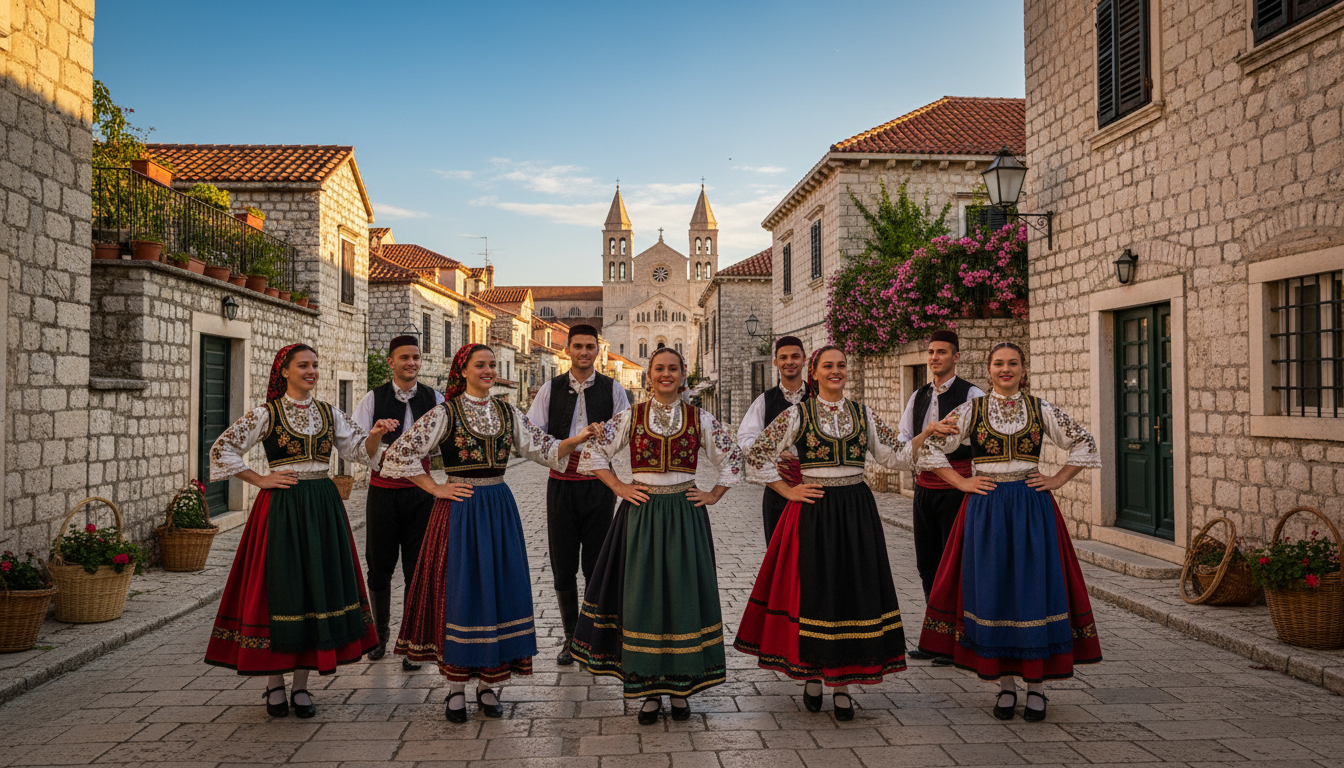
The “old kolo” is an early Christian dance. Dancers hold hands at shoulder level, moving like soft rowing. The group Šibenske šuštine revives this tradition in the city.
Another classic is the “Croatian promenade.” This complex dance has five parts and 15 figures. It became popular in the late 19th and early 20th century.
Music fills the air here. Men’s a capella groups, called klapa, are a defining sound. People from the Dolac quarter were once known as the best singers in Dalmatia.
Women on the islands preserve old Illyrian melodies. The hinterland has loud folk songs called ojkalice. Each place has its own unique dance style.
Distinctive Attire and Artisan Crafts
The red cap is a famous symbol. It evolved from medieval times through the Renaissance. Modern versions feature boule embroidery on the margin.
Šibenik buttons are silver filigree decorations. They appear on men’s waistcoats and women’s jewelry. Women from Zlarin wear unique red coral pieces.
Clothing varies greatly between settlements. Skirts with braces are common from Primošten to Tribunj. Murter and Pirovac feature embroidered shirtfronts.
Men’s bands differ by location. Coastal and island men wear silk. Hinterland men prefer knitted or woolen versions. This way of dressing shows people‘s roots.
Artisan crafts include wooden objects, ship models, and laced shirts. These items show the skill passed down through time. Some crafts even incorporate local stone.
You can see this rich culture in the historic town. It’s a living tradition that connects the past to the present.
Experiencing Modern Šibenik
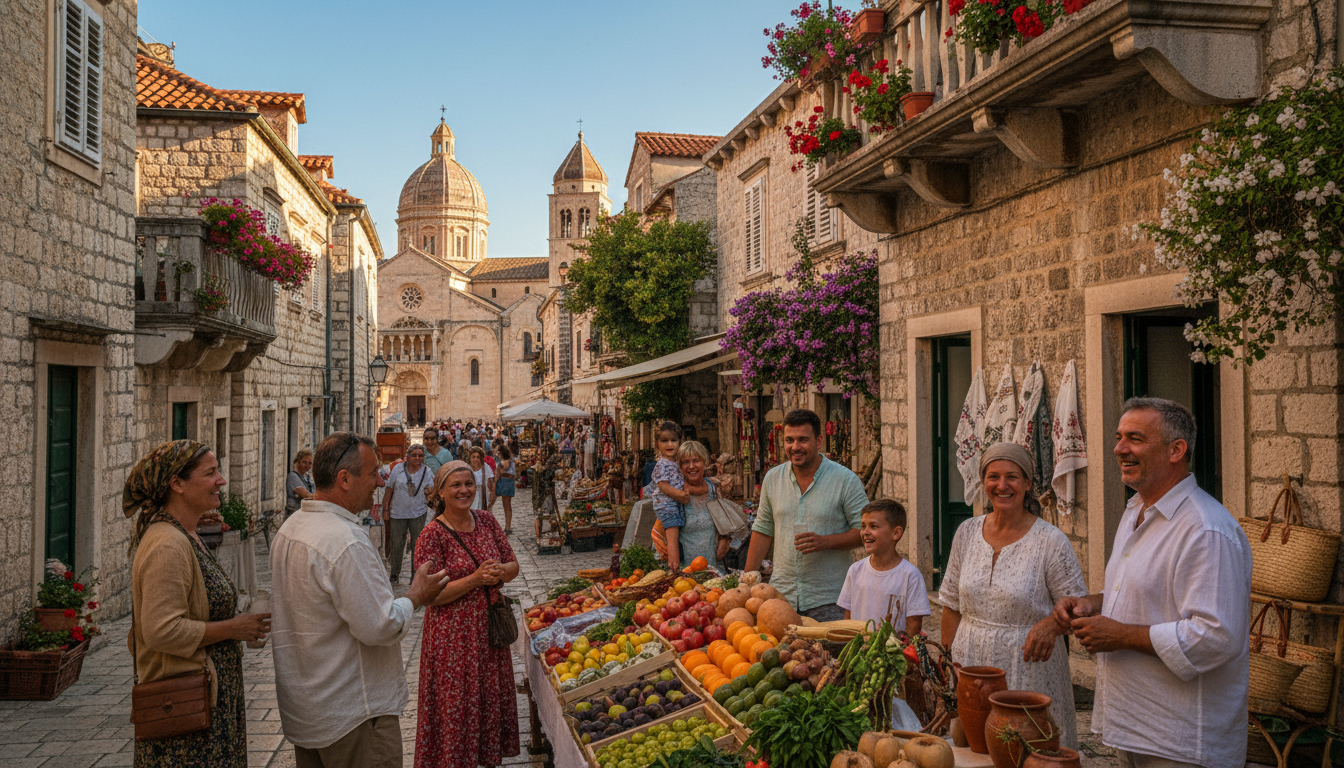
The present-day scene offers a vibrant mix of market bustle and serene stone lanes. You’ll find a city where daily life seamlessly blends with its historic core.
Vibrant Markets and Local Cuisine
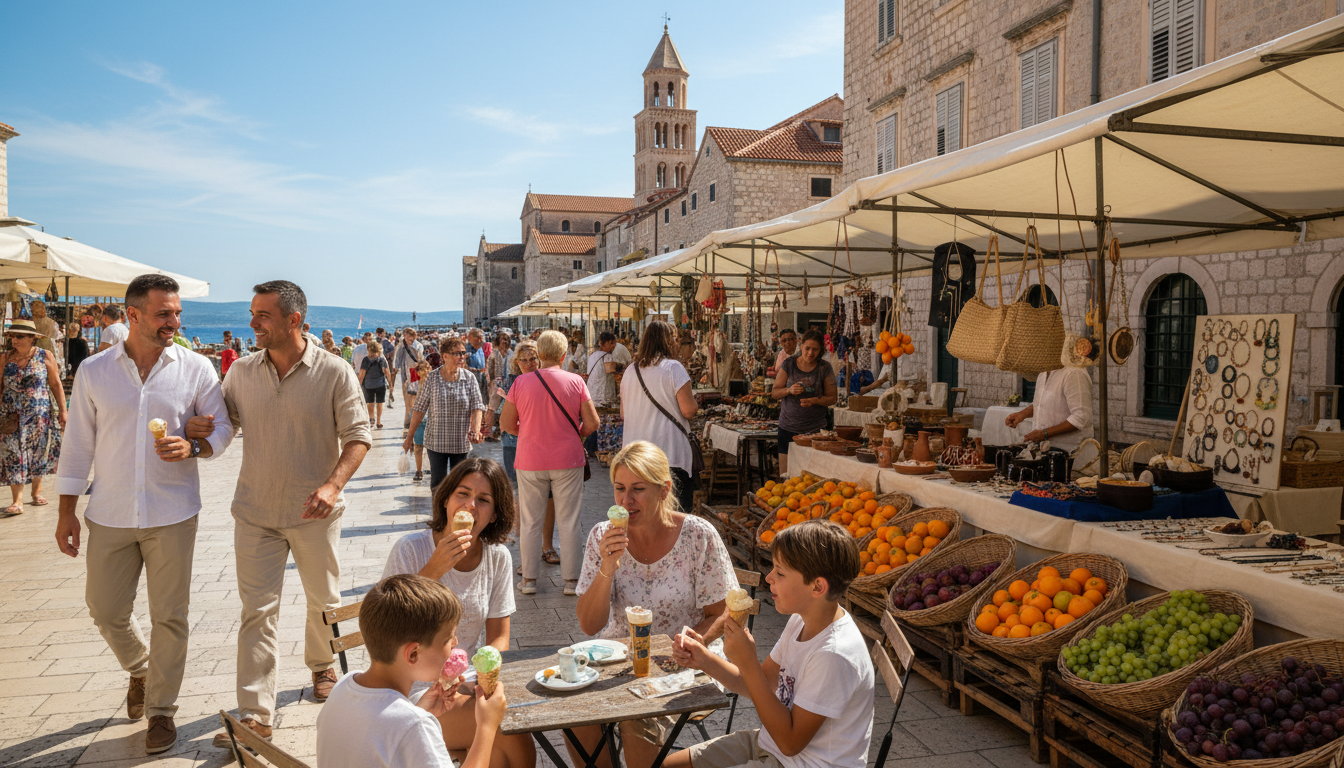
Start your morning at the central market. It opens at 7:00 AM and closes by noon, matching the butcher shops’ schedule.
This is the best time to feel the city‘s energy. Fresh fish from the Adriatic Sea dominates menus.
Locals prepare it simply with parsley, garlic, and olive oil. Try traditional fried sweets like fritule in the town center.
For a sophisticated meal, book Pelegrini near the cathedral. Šešula offers budget-friendly fish fast food.
Sample Mihovil beer, brewed only in this region. Every restaurant has vegetarian options.
Urban Exploration of the Old Town
The entire old town is a vehicle-free zone. You’ll need paid parking if you arrive by car.
Wander the main streets, Masna ulica and Kalelarga. They are the heartbeat of this historic place.
Stone architecture defines every view. Steep, winding passages reveal laundry hanging above.
Narrow streets open suddenly into sunny squares. Churches and monasteries crowd the center.
Explore Azimut, a cultural center in a medieval vault. It once supplied water to the city.
Climb stone steps to fortress ruins for panoramic views. You’ll see the sea and nearby islands.
Descend to the harbor where tourist boats dock. This way of exploring lets you absorb the town‘s rhythm.
Water surrounds the place, making it a unique part of the Dalmatian coast.
Seasonal Tips and Practical Traveler Insights
Timing your trip wisely unlocks the best weather and fewer crowds in this historic destination. A little planning ensures you enjoy the coastal charm without hassle.
Best Times to Visit and Weather Considerations
Visit from May to October for warm days. Peak summer brings intense heat and many visitors.
September is ideal. You get excellent weather and a relaxed vibe. Early October still offers good water temperatures for swimming.
Check out the best beaches in Šibenik during this pleasant time. Strong bora winds can occur, so pack a layer.
Transport Options and Day Trips
Fly into Split or Zadar airports. Each is about an hour’s drive from the city.
Explore the old town entirely on foot. The train and bus stations are centrally located.
Public buses serve the city well. Ferries run daily to nearby islands.
For a faster way to the islands, consider taxi boats. They cost more but save time.
Don’t miss day trips. Krka National Park is just 30 minutes away. Kornati National Park is another stunning part of the region.
Major festivals like Šibenik Night in June add cultural depth. Plan your visit around these events for a richer experience.
Conclusion
Your journey through this historic city reveals a living culture shaped by generations. You’ll find authentic traditions here that feel distinct from other coastal towns.
Centuries-old folk practices, from dance to artisan crafts, are preserved with remarkable skill. The iconic stone architecture stands as a permanent testament to this dedication.
Understanding these traditions enriches your entire experience. It helps you connect with residents in meaningful, lasting ways.
Smart planning around weather and community events ensures you see the destination at its best. Visit the vibrant markets and try traditional food for a direct link to daily life.
Your respectful visit supports the preservation of this cultural heritage. It creates memorable experiences that go far beyond typical tourism.