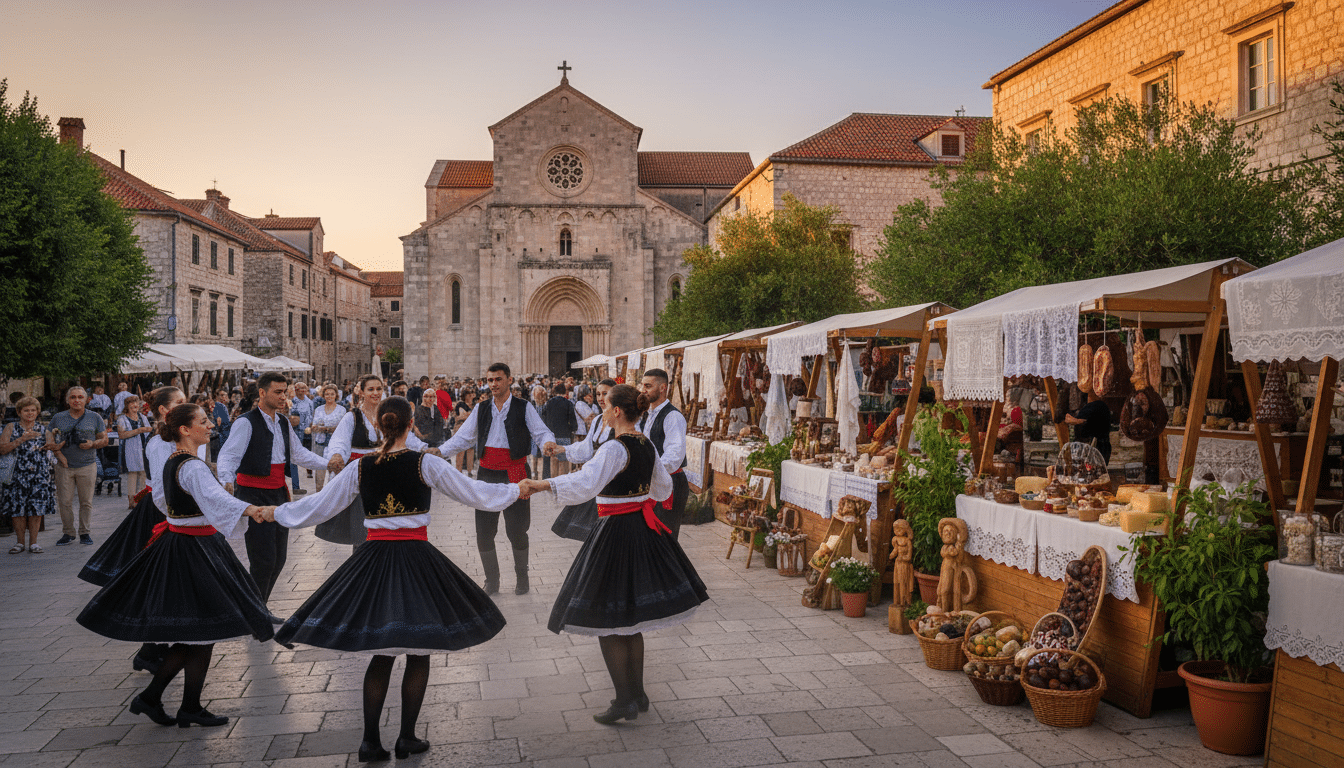
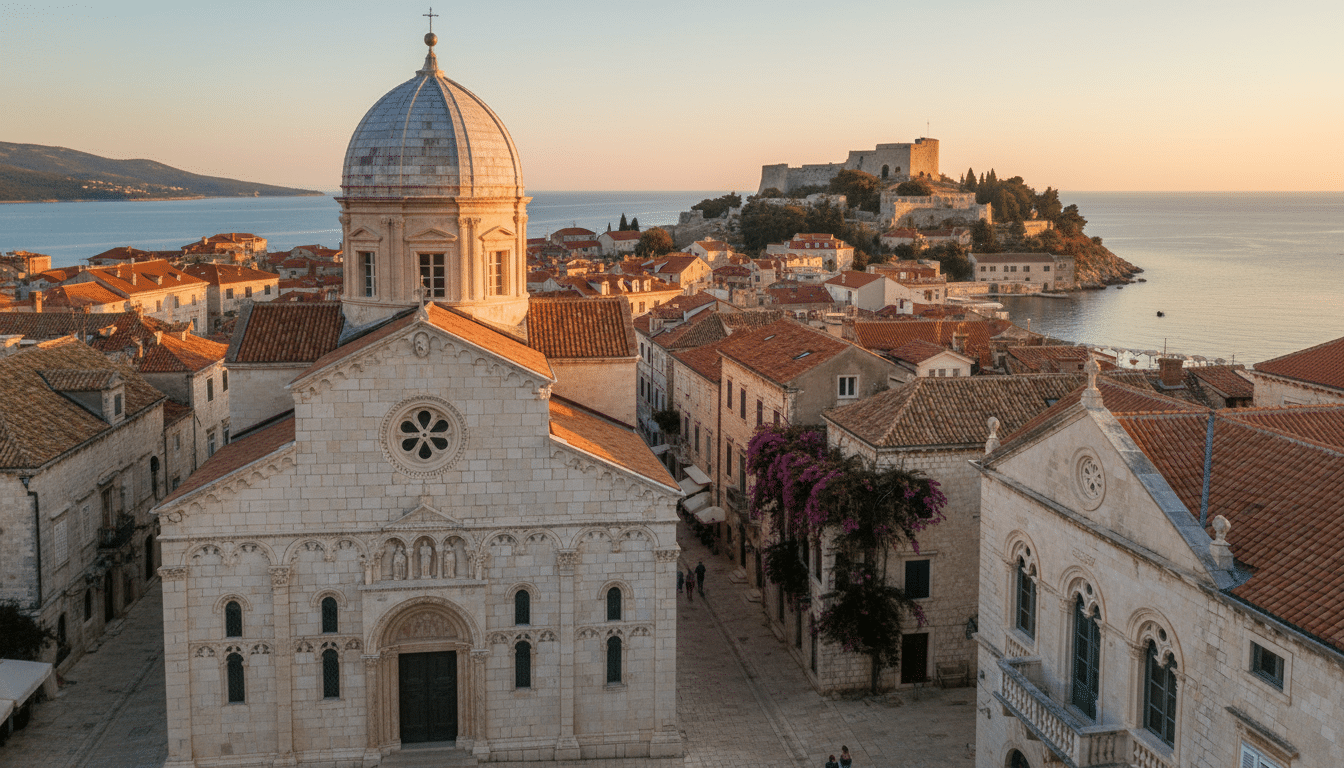
The architecture of Šibenik greets you with honey-colored stone, domes, and tight lanes that open onto the harbor. You can feel the sea air where the Krka meets the Adriatic coast and spot details—stonework joints, carved portals, and rooflines—that tell the city’s long history.
This short guide sets expectations: the top stops, why they matter, and how to see them quickly on foot. Expect clear dates, names, and building techniques where they help you understand what you’re looking at.
Prioritize two heritage highlights and then let the old town streets and hilltop views fill the rest of your time. Think like a walker—notice facades, entrances, and construction seams—rather than racing a checklist.
Key Takeaways
- Compact city center: Most sights are walkable, saving time on short trips.
- Top priorities: Two major heritage sites anchor the route; plan them first.
- Look for material details: stone joints, domes, and carved entrances.
- Practical tips included for an efficient walking route and timing.
- Dates, names, and techniques appear where they matter for context.
Why Šibenik stands out on the Adriatic coast
The Krka estuary gives the city a sheltered, walkable harbor. You find a waterfront promenade lined with sailboats and cafes. That calm water makes the seafront feel protected and easy to walk.
Where river meets the sea: how geography shaped the harbor town
The natural harbor forced buildings close to the water. Stone houses and narrow lanes save space and resist sea winds. Hilltop defenses sit above the old port where they could watch the adriatic sea approach.
A Croatian-founded town with layered influences
People founded the town at least by 1066 AD. Over time Venetian, Byzantine, Hungarian, and Habsburg rule changed styles and fortifications. You see each period in streets, churches, and walls.
Two UNESCO World Heritage sites in one small city
Two world heritage sites mean preserved landmarks and clear visitor signs. They sit close together, so you can hit major sights in one day. Start at the cathedral and then head to the seaward fortress for a full view of the coast.
- Practical tip: Combine the waterfront, old town stairs, and hilltop viewpoints in a single walking route.
- What to expect: Preserved monuments, good signage, and compact distances between sites.
- More details: See top attractions and planning notes on the linked guide — top attractions to see in town.
Cathedral of St. James: Šibenik’s UNESCO World Heritage masterpiece
Step close to the basilica and you will see a century of changing styles carved in stone. Construction ran from 1431 to 1536, so you can spot late Gothic work next to early Renaissance details. The timeline explains why some parts look sharper and newer than others.
This cathedral was built entirely from stone, including the dome. That all-stone approach is rare—study the dome from below and from across the square to see how the mass is resolved without metal ribs.
Look for the frieze of 71 sculpted faces along the outer apse. These small portraits record 15th-century residents. Walk close to read individual expressions, then step back to take in the full sequence.
- Key names: Juraj Dalmatinac started the design; Niccolò di Giovanni Fiorentino continued the work after Dalmatinac’s death in the 1470s.
- Engineering: Dalmatinac’s interlocking stone-slab system solved steep terrain at the baptistery and influenced later Renaissance building.
- Viewing tips: Step back for massing, move near to study joints and seams, and note where Gothic carving meets Renaissance balance.
For more nearby sacred sites and context, see religious sites worth visiting. This helps you link the cathedral to the town’s wider world heritage story.
The architecture of Šibenik beyond the cathedral: old town streets, churches, and stone details
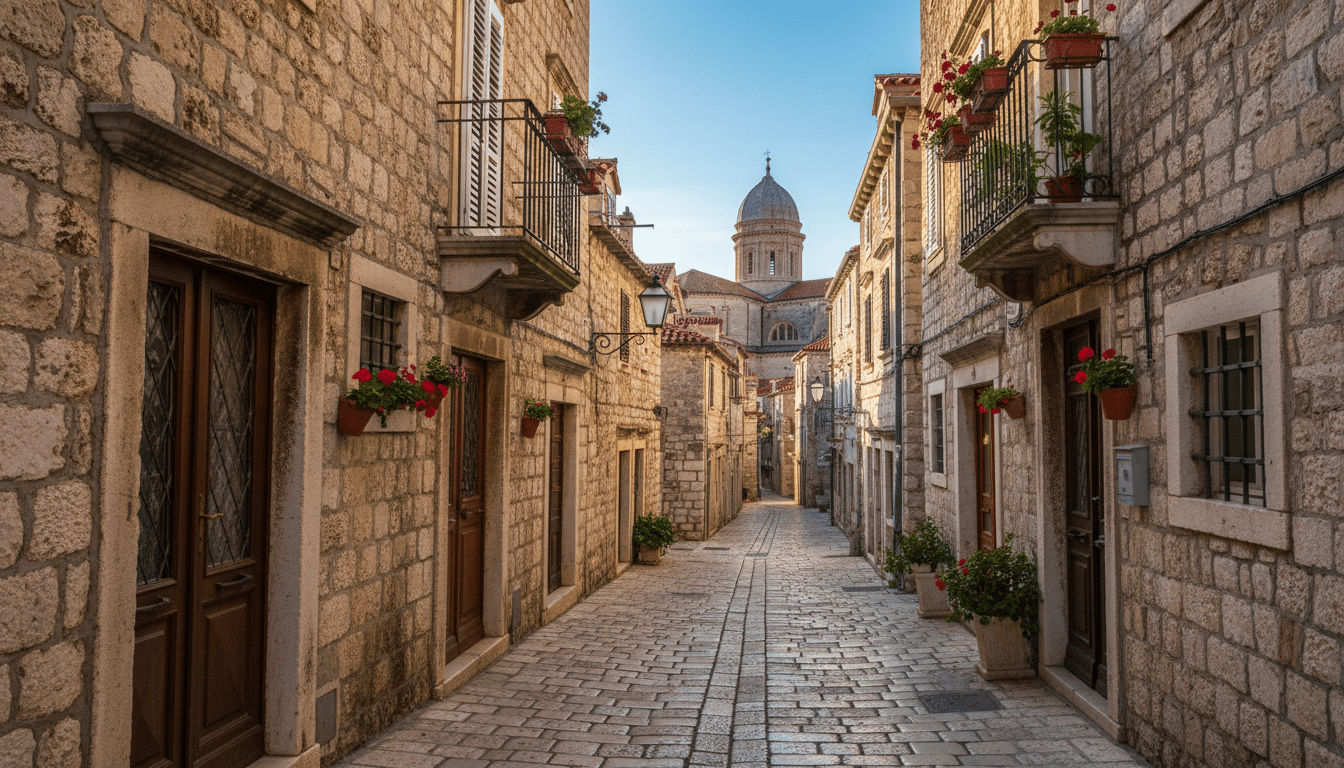
Walk the steep lanes and you’ll see how the town’s stones record repairs, fashions, and daily life.
Reading the city in stone
Look at facades, stairways, and narrow alleys to tell old from new. Older stone shows uneven joints and deeper wear. Newer patches are smoother and lighter.
Check main entrances and worn steps. Repair seams often run like a timeline across walls. These simple cues reveal past construction choices and later fixes.
Churches across periods
Pass small churches and notice differing foundations and added chapels. Romanesque bases sit with later Gothic or baroque details. This mix tells you which period changed each part.
Šibenik City Museum: quick context
Stop at the City Museum for a fast civic overview. Exhibits span medieval life to modern changes. A short visit makes the streets read clearer.
St. Lawrence Monastery garden and rooftop views
Climb to the monastery for a quiet Mediterranean garden and calm shade. It’s a perfect break and a vantage point over rooftops. From here you can map the town’s streets and spot key roofs and entrances.
- Slow down on steep lanes—look up at frames and joints.
- Take short stops instead of detours; note worn steps as orientation marks.
- Use the museum as your source for civic history before deeper exploration.
Fortress architecture that protected the city by sea and by hill
Stone forts guard both the channel entrance and the hilltops, each serving a distinct defensive role. The town needed sea-facing defense to stop ships and hilltop walls to watch approaches up the valley-like harbor.
St. Nicholas Fortress at the St. Anthony Channel
Built by the Venetians in the 16th century, nicholas fortress sits at the entrance to the St. Anthony Channel. It controlled the approach to the harbor and blocked seaborne attack.
Boat tours leave the waterfront and take about 30 minutes. You land, then explore the fort on foot. Look for readable walls, the clear footprint, and sightlines that still match the original construction. Some visits include an interactive audiovisual tablet that explains the defenses.
What to notice and how to visit
Approach by water to see how the fort locks the channel. Notice the entrance angles and cannon positions. “Well preserved” means you can trace walls and walk the defensive path.
St. Michael’s Fortress above the town
Climb the hill for st. michael’s fortress. The walls frame wide views across the sea and city. Restored sections host concerts and events in summer, so the place feels alive as well as historic.
- Quick decision: choose nicholas fortress for coastal engineering and channel defense.
- Or pick: st. michael’s fortress for panoramas and cultural events.
- Both: together they explain why these world heritage sites kept the town safe after the 16th century construction.
How to plan a focused architecture walk through Šibenik today
Map a short loop that links the cathedral, the waterfront, and a hilltop fort. This route keeps walking time low and sights high.
A practical route that connects the cathedral, waterfront promenade, and hilltop fortresses
Start at the cathedral plaza and visit the nearby city museum for quick context. Move through a few old lanes, then follow the harbor promenade. Finish with a climb to St. Michael’s or take a short boat ride to St. Nicholas fortress.
Best times for photos and views
Early morning light brings out stone texture on facades and alleys. Late afternoon warms the dome and rooflines—ideal for wide shots along the adriatic coast.
What to look for as you go
- Domes and main entrances: pause close to study joinery.
- Carved friezes: step back to read sequences of faces.
- Visible construction seams: note different years and a later part added to walls.
Timing & tips: half-day covers the cathedral, museum, and waterfront. A full day lets you add both fortresses and a boat trip. Wear sturdy shoes for stairs. If it’s hot, swap the climb to later in the day when views and light are better.
Conclusion
A close look at walls, doorways, and domes turns a short visit into a lasting memory. Slow down and study the all-stone cathedral first, then choose a fortress by sea or hilltop to complete your route.
Notice the stone dome, the frieze of carved faces, and how fortifications sit in the landscape. Stop at the museum for quick context, then follow a short walking loop or take the boat to St. Nicholas if time allows.
Plan by picking your photo light and a time window, bring water and shade, and respect active worship spaces. Watch your footing on steep streets and move at a pace that lets details reveal themselves.