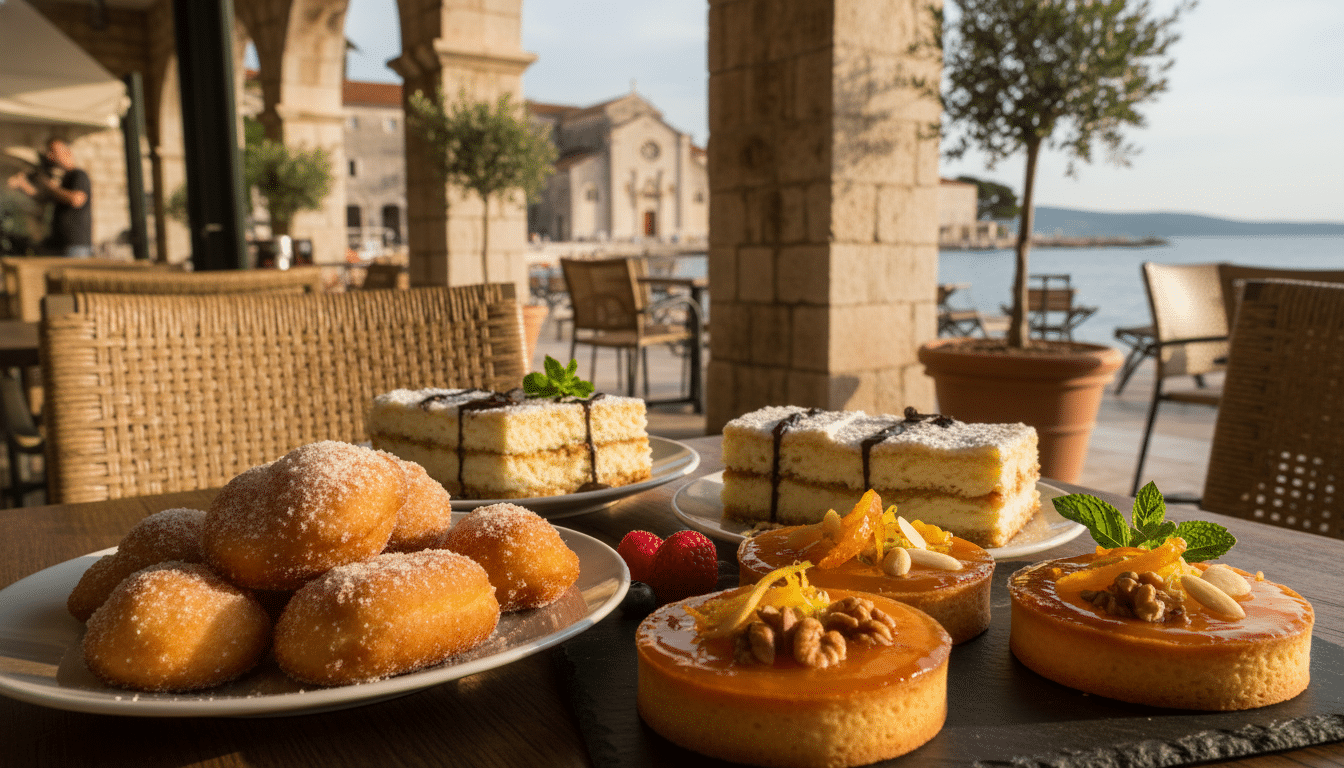
Imagine the scent of warm, buttery pastry and sweet vanilla drifting from a family kitchen on the Dalmatian coast. This is the heart of croatian desserts, especially in the historic city of Šibenik. Here, sweets are more than a final course; they are edible stories passed down for generations.
Family recipes are treasured like heirlooms, marking birthdays, holidays, and anniversaries. No matter how full you are from a meal, there’s always a place for something sweet. These treats connect families across time through their exceptional taste.
This guide opens a window into that world. You will discover creamy custard cakes and crispy fried pastries that define the region. Understanding these sweets helps you appreciate the local culture, where offering a dessert is a true sign of warmth and hospitality.
Key Takeaways
- Šibenik offers a unique look into coastal Dalmatian dessert traditions.
- Family recipes are cherished and passed down through generations.
- These sweets are central to celebrations and daily life.
- The guide covers a range of treats, from cakes to pastries.
- Tasting these desserts provides an authentic cultural experience.
- Offering sweets is a key part of local hospitality.
- This resource helps travelers connect with real culture beyond typical tourist activities.
Overview of Croatian Sweet Traditions
The connection between seasonal festivities and specific sweet treats reveals a deep cultural history. These traditions form an essential part of family life and community celebrations.
Historical Roots and Cultural Heritage
Many sweet recipes have been passed down through generations without significant changes. This culinary heritage spans hundreds of years. Handwritten notebooks preserve exact measurements and techniques.
The Austro-Hungarian Empire influenced many traditional sweets. You’ll find similar treats throughout Central Europe with regional variations. Local adaptations make each area unique.
Seasonal Celebrations and Occasions
Religious holidays dictate which sweets appear throughout the year. Specific cakes mark Easter, while cookies dominate Christmas celebrations. Carnival season brings fried pastries to the table.
These traditions create meaningful memories for people across generations. The recipes use simple, accessible ingredients that work perfectly together. This approach ensures everyone can participate in the celebrations.
Sharing these sweets during gatherings is a key part of hospitality. Refusing a piece of cake could seem impolite to your hosts. The food serves as a bridge connecting people through shared experiences.
Croatian Desserts Šibenik: Local Flavors and Traditions
What makes Šibenik’s sweet traditions special begins with what grows naturally in the surrounding area. The Mediterranean climate shapes every aspect of local baking.
Regional Ingredients and Local Produce
Local bakers work with ingredients that thrive in this coastal environment. Citrus trees provide bright lemon and orange zest for many recipes.
Almonds and figs grow abundantly throughout the region. These ingredients add natural sweetness and texture to traditional treats.
You’ll notice olive oil often replaces butter in local recipes. This creates a lighter flavor profile than northern European desserts.
Stories Behind the Sweets
Each family recipe carries stories passed down through time. Generations have perfected their versions of classic Croatian desserts.
Special occasions call for specific sweets in this area. These treats mark important life events and celebrations.
The unique flavor combinations reflect centuries of cultural exchange. Venetian influences blend with local Croatian traditions.
Family recipes remain closely guarded secrets over time. Each household adds personal touches to create their signature versions.
Exploring Timeless Favorites
Certain treats become timeless because they capture the essence of comfort and celebration in every bite. These classics have earned their place through generations of enjoyment.
Kremsnita and Its Variations
Kremsnita stands as a beloved cream cake featuring silky egg custard between crispy puff pastry layers. The original version comes from Samobor, a charming town near Zagreb.
Pastry chef Đuro Lukačić created this dessert in the 1920s after training in Vienna and Budapest. The classic preparation uses mainly egg custard filling with a thin layer of whipped cream.
You can taste the original warm version at U Prolazu pastry shop. Zagreb offers its own variation with chocolate icing replacing the top crust.
Breskvice: Bite-Sized Treats
Breskvice are miniature peach-shaped cookies that look almost too pretty to eat. Each cookie half gets hollowed out to create space for the special filling.
The filling combines chocolate, peach jam, toasted hazelnuts, and a hint of rum. Finished cookies get dipped in colored milk and rolled in sugar.
You’ll find these labor-intensive treats at weddings and celebrations. They represent the dedication to creating beautiful, intricate sweets.
Rich and Layered Cakes of Croatia
The true artistry of local baking shines in multi-layered creations. These cakes showcase incredible skill and a deep understanding of flavor balance.
Each slice reveals a beautiful history of technique and tradition. You will discover two standout examples below.
Madarica: The Chocolate Layer Cake
Madarica is a classic chocolate cake known for its delicate structure. It features five impossibly thin layers of cake alternating with a rich chocolate cream filling.
A glossy dark chocolate glaze crowns this delightful dessert. The name means “Hungarian lady,” nodding to its resemblance to famous cakes like Dobos.
Assembling madarica tests a baker’s patience. The fragile layers can break easily. You often find this treat cut into small rectangles at celebrations.
Splitska Torta and Its Creamy Texture
Splitska Torta offers a different variety of layered experience. This cake from Split uses ingredients readily available in Dalmatia.
Its layers combine crisp meringue with a luscious yellow cream. The meringue traditionally includes almonds and dried figs.
The cream is made from egg yolks, butter, and vanilla. Modern versions might use walnuts or raisins, but the character remains.
For an authentic taste, visit Luka Ice Cream & Cakes in Split. They perfect the balance of airy meringue and smooth cream filling.
Both cakes demonstrate a mastery of creating stunning, multi-textured desserts.
Iconic Pastry Creations with Unique Flavors
Some pastries carry more than just flavor—they hold generations of family history. These creations represent the heart of home baking traditions that have been perfected over time.
Paprenjaci: Spiced Cookies with History
Paprenjaci offer a surprising blend of flavors in a simple cookie form. The name comes from Renaissance times when “papar” meant a spice mix.
These crispy treats combine honey, olive oil, and spices like cinnamon and cloves. They were traditionally given as gifts for special occasions.
You’ll find these cookies shaped like horseshoes or religious symbols. They make excellent souvenirs that represent authentic heritage.
Makovnjaca and Orehnjaca: Sweet Yeast Rolls
These rolled pastries feature a soft yeast dough with a sweet filling. The dough requires careful preparation and two rises before baking.
Grandmothers pass down their secret recipes through hands-on teaching. Children learn by watching before they’re trusted to knead the dough themselves.
The filling uses freshly ground walnuts or poppy seeds mixed with milk, sugar, and cinnamon. Sometimes raisins add extra sweetness to the mixture.
When sliced, these rolls reveal a beautiful spiral pattern. They represent cherished childhood memories for many families.
Freshly Fried Treats and Festive Specialties
The sizzle of hot oil and the sweet aroma of frying dough signal the arrival of Croatia’s most festive treats. These golden specialties appear during Christmas markets and family gatherings, bringing warmth to winter celebrations.
Fritule and Krofne: Deep-Fried Delights
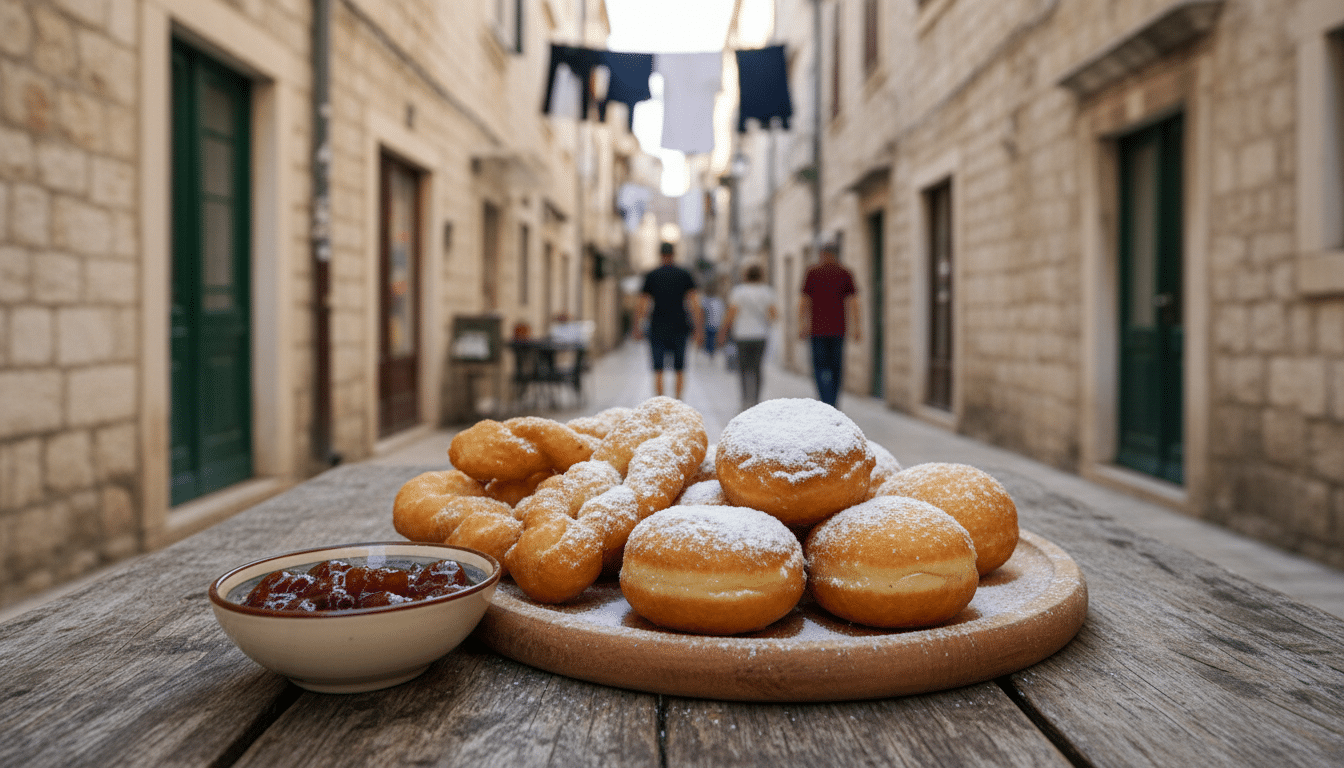
Fritule are small fried balls that dominate Christmas celebrations. The basic dough requires flour, eggs, milk, butter, and sugar. Experienced cooks mix vigorously until bubbles form.
Adding rum or cognac creates an airy texture. Raisins or grated apples make them juicier. You’ll find these treats at Zagreb’s Advent markets, coated with powdered sugar or melted chocolate.
Princes krafne are another popular fried dessert. The dough needs precise measurements of flour, water, butter, sugar, eggs, and salt. Each pastry gets filled with rich egg yolk custard.
Krostule: Crunchy Festival Pastries
Krostule originated in Venice but became a Croatian tradition. Families prepare them for religious holidays and Carnival season. The simple dough uses flour, eggs, sugar, butter, rum, and salt.
Dalmatian versions include lemon liqueur, while Istrian recipes use white wine. The dough gets rolled thin and twisted into decorative ribbons before frying.
These crunchy pastries taste best within a day of making. They crumble delicately in your mouth. Enjoy them after meals or with a cup of coffee.
Traditional taverns along the coast often feature krostule on their menu. This dessert represents the adaptability of regional recipes.
Flaky Pies and Layered Puddings
The flaky layers of Gibanica reveal a northern tradition of baking that feels both ancient and wonderfully comforting. This distinctive pastry represents a different approach to layered desserts compared to coastal specialties.
Two main varieties dominate family kitchens: Medimurska and Prekmurska gibanica. Both create a rich cake-like experience through their careful construction.
Gibanica: Medimurska and Prekmurska Varieties
Medimurska gibanica comes from the northern region near Hungary. It features four distinct layers between thin phyllo dough. The filling combines fresh cheese, grated apples, walnuts, and poppy seeds.
Prekmurska gibanica requires more precise assembly. Bakers must follow a specific order of fillings repeated twice. This creates eight layers using the same four ingredients.
Both versions receive a topping of cream mixed with egg yolk before baking. The cream often includes milk or sour cream. This creates a golden crust during the 40-minute bake.
You’ll appreciate the variety of textures in each bite. The soft cheese filling contrasts with the flaky pastry. Sweet apples and nuts add complexity to this remarkable cake.
Traditional restaurants north of Zagreb serve both varieties. You can enjoy gibanica warm from the oven or cooled the next day. Each temperature offers a different but equally satisfying experience.
Handcrafted Cookie Recipes from Childhood Memories
Cookie recipes passed down through generations carry more than just ingredients—they preserve precious family memories. These simple treats connect you to cherished moments from youth.
Medenjaci and Slatka Salama
Medenjaci are soft honey cookies that evoke strong childhood nostalgia. The recipe uses honey as the main sweetener, creating a gentle flavor.
People often enjoy these cookies with afternoon coffee or tea. They represent a simple, comforting treat loved by all ages.
Slatka salama gets its name from its cylindrical shape. This unique recipe combines crushed wafers with creamy filling.
The mixture gets rolled tightly and sliced like salami. Each bite offers both creamy and crunchy textures.
Other Traditional Cookie Inspirations
Licitarska srca are decorative gingerbread hearts from northern regions. Young people traditionally give them as pledges of love.
UNESCO recognized these artistic cookies as cultural heritage in 2010. They come shaped like hearts, mushrooms, and horseshoes.
The traditional recipe creates sturdy cookies painted with red and white designs. You’ll find them at markets throughout the country.
Each cookie variety follows a specific preparation order. This ensures the perfect texture and appearance for every special occasion.
Authentic Experience: croatian desserts sibenik
To truly understand the heart of this region’s culinary traditions, you need to visit the places where sweets are part of everyday life. The authentic experience goes beyond just tasting the food—it’s about participating in local customs.
Local Cafés and Bakeries
Šibenik’s old town bakeries offer the real deal. You can find traditional cakes like kremsnita made with family recipes. These spots give you an authentic taste of daily life.
Local cafés serve strong coffee alongside sweet treats. This combination creates the perfect afternoon break. It’s a social ritual you’ll want to add to your travel itinerary.
Holiday Gatherings and Family Traditions
Visit during festive holidays for special treats. Christmas markets feature fritule, while Easter brings unique cakes. These occasions showcase desserts not available year-round.
Family celebrations reveal the deepest traditions. Wedding feasts display elaborate dessert spreads. Accepting sweets shows respect for local hospitality during your travel experience.
Make a list of must-try croatian desserts before your visit. The unique flavor profiles will surprise you. Enjoy them with local coffee for the full experience.
Heritage Behind Baking: Stories and Recipes
The true magic of traditional baking lies not in written instructions but in the hands that have practiced for decades. These cherished recipes form an essential part of family identity, preserved in handwritten notebooks that span generations.
Generational Secrets in the Kitchen
Grandmothers guard their specific recipe variations as precious family secrets. Each household makes subtle changes to basic recipes that distinguish their version from neighbors’. This creates unique family signatures in every treat.
Children begin learning by watching grandmothers work from an early age. They patiently observe gentle movements and techniques without touching the dough. This apprenticeship takes time and involves many mistakes before mastery.
Some traditional recipes deliberately avoid exact measurements. The legendary Rab cake recipe from 1177 contains no ingredient quantities. Bakers develop intuition about proper dough consistency through experience.
Seasonal variations affect the ingredients and measurements in these recipes. Summer versions might use fewer eggs due to heat, while winter recipes need adjustments for cold weather. This approach means authentic treats taste slightly different each time.
The phrase “your heart should guide your hand” captures this baking philosophy. Modern bakers sometimes struggle because written instructions can’t capture the tactile knowledge gained through years of practice. This living tradition continues in family kitchens across the city.
Pairing Desserts with Croatian Beverage Traditions
The perfect ending to a Dalmatian meal often comes with a carefully chosen beverage that enhances every sweet note. Local drinks, from strong coffee to exquisite wines, turn a simple treat into a memorable experience. Understanding these pairings adds a rich layer to your culinary travel.
Local Coffee and Dessert Wine
An afternoon coffee break is a cherished ritual. Strong espresso is the ideal partner for small cakes and cookies. The bitter notes of the coffee balance the sweetness of treats with vanilla or caramel flavors.
For a truly special occasion, explore local dessert wines. The most famous is Prosek, a sweet wine from Dalmatia. It is made with a concentrated process, using about seven times more grapes than regular wine.
Do not confuse it with Italian Prosecco, which is sparkling. Prosek has a deep, rich flavor that pairs wonderfully with creamy desserts. Families traditionally serve it during holidays.
Another excellent choice is Muskat Momjanski from the Istrian area. This golden wine offers aromas of honey and dried figs. Serve it chilled alongside a cream-based cake for a refreshing taste.
Zelenac is a dessert wine from inland vineyards. It balances its sweetness with a sharp, fresh note. This makes it perfect for fruity desserts or pastries with a cinnamon top.
Conclusion
Your journey through the sweet traditions of Dalmatia connects you directly to generations of family stories and local culture. This guide provides a practical list of essential treats, from layered cakes to festive pastries.
Each bite offers a unique taste of history. Simple ingredients like flour, eggs, and walnuts create an incredible variety of flavor. The best travel plan combines visits to bakeries in a coastal town like Šibenik with seasonal celebrations.
Understanding the stories behind these desserts turns a simple treat into a meaningful experience. You are not just eating food; you are sharing in a cherished heritage. Let this be your starting point for a delicious adventure.