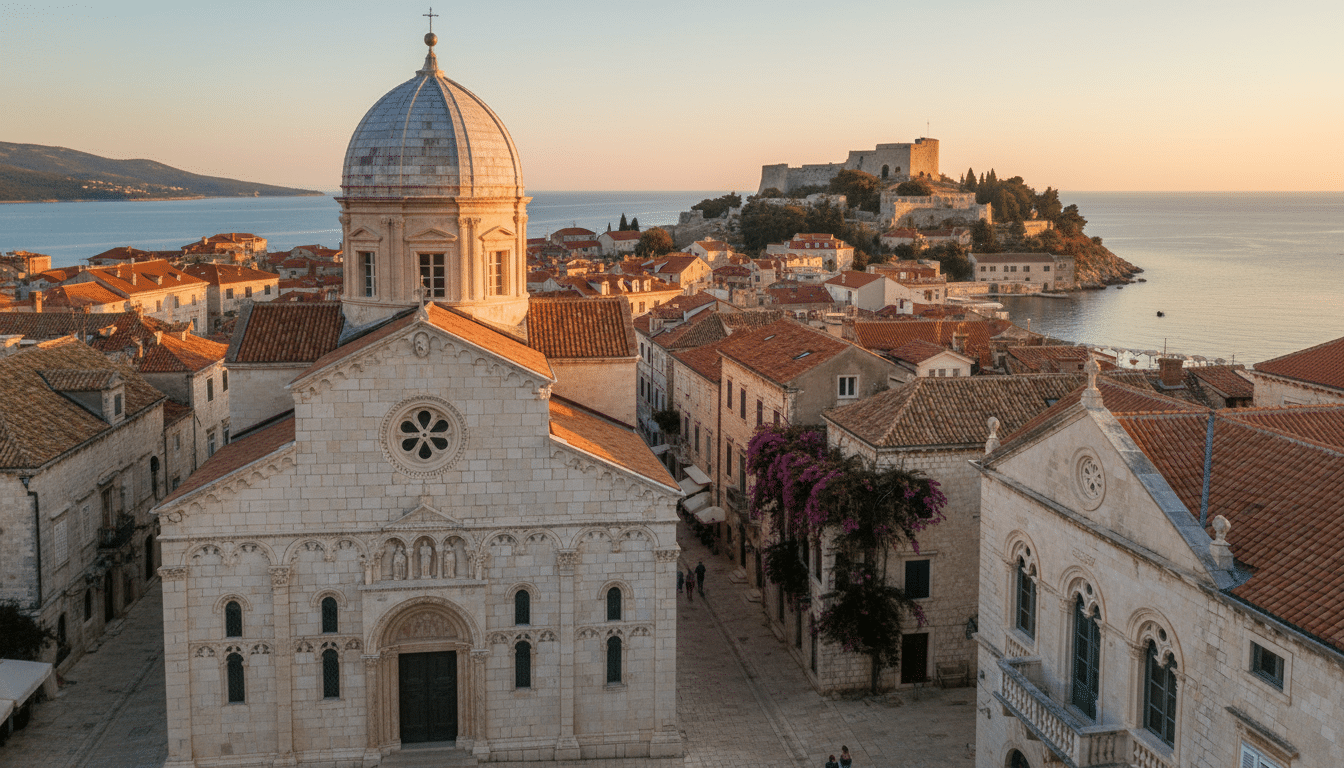
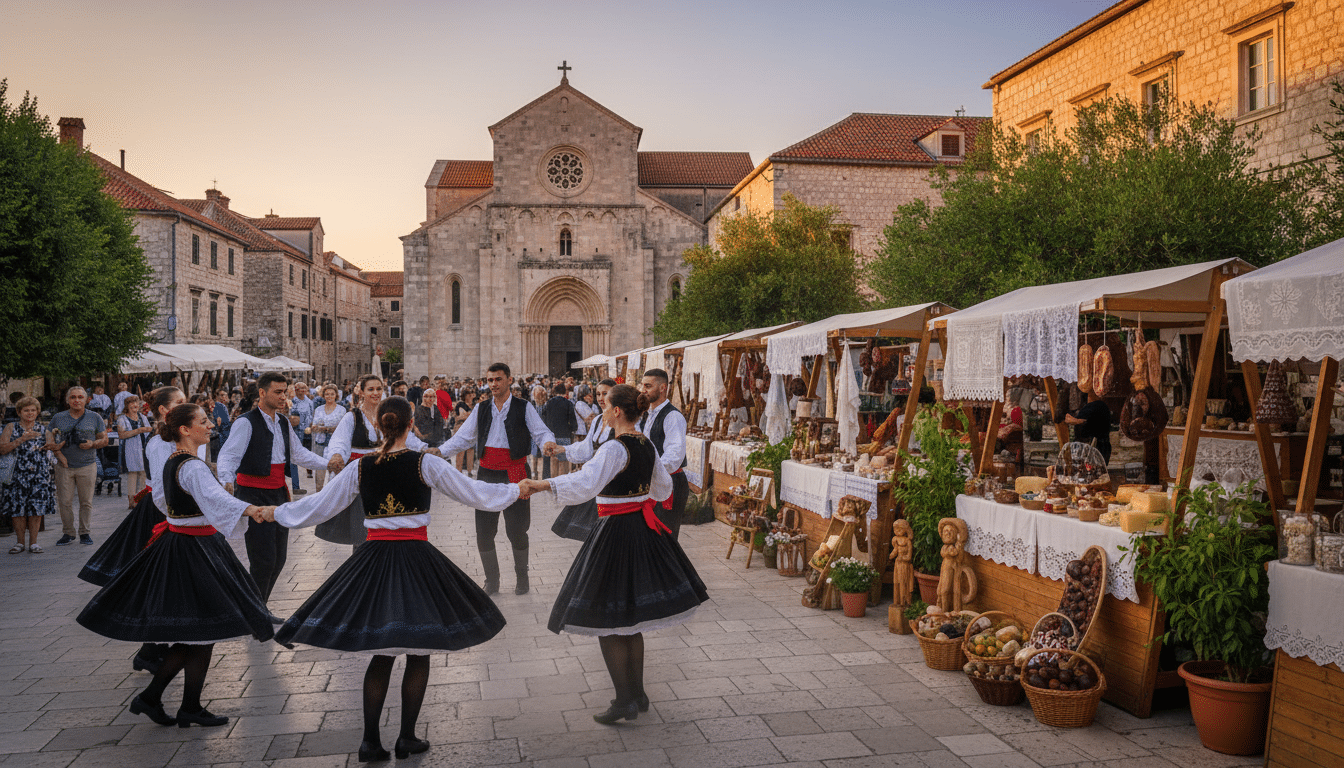
The phrase folklore in Šibenik points you to real places where stories meet stones, food, and festival stages.
This coastal city was first recorded in 1066 under King Petar Krešimir IV and keeps its past visible through two UNESCO sites and summer events held on old streets and fortresses.
Expect a practical, list-style guide that helps you spot local legends tied to lakes and monasteries, civic pride around rulers and defenses, and everyday customs shown in cafés and meals.
Walk the stone lanes, visit the Cathedral of St. James, climb a fortress, then add a half-day trip to Krka or Dragon’s Eye Lake to link stories with landscape.
Key Takeaways
- Pick 3–5 stops for a walking day; add one nearby legend site as a half-day trip.
- Look for traditions in markets, cafes, and summer performances on historic stages.
- The city layout—lanes, squares, waterfront—keeps customs visible and easy to follow.
- Main stops: old town, fortresses, Cathedral of St. James, Krka, Dragon’s Eye Lake.
- Join seasonal festivals and sample local dishes that reflect civic identity.
Where Šibenik’s stories come from: a town shaped by the Adriatic Sea
A town’s origin shapes how its people tell stories and meet the sea. Here, founding roots and the waterfront explain many local habits.
Founded by Croats and first recorded in 1066
First written mention appears in 1066, a clear mark of the 11th century. That early record matters because it shows a Croatian foundation rather than Greek or Roman origins.
That difference gives locals a distinct civic memory and pride. You will hear people point to 1066 as proof of long ties to place.
What the city’s name may mean, and why it matters
Scholars offer two main ideas about the name. One links the word to “šibe” — twigs used in old fences. The other points to Latin “Sibinicum,” meaning a wooded area.
Both explanations turn a simple name into a local story. Place-name tales help people pass identity across generations.
How the Krka River’s course and the coastline shape daily life
The Krka River’s course meets the adriatic sea at a sheltered estuary. That created a protected harbor for trade and defense.
Walk the waterfront and you’ll see why: promenades, cafés, and small squares face the coast and sea breezes. A closed estuary feels intimate—habits and tales stay steady there.
- Trade and defense: the harbor encouraged steady waterfront routines.
- Name stories: simple words became local lore.
- Daily life: people meet where sea views set the pace.
Folklore in Šibenik you can still feel in the old town streets
Winding stone lanes make the old town feel like a living set where history meets daily life.
Old stone streets as living stages for legends and civic pride
Walk a mapped route that connects the main squares and landmarks. Stand by the cathedral, cross a sunlit piazza, then follow alleys that slope toward the waterfront.
You will see carved doorways, small galleries, and cafés where locals pause and chat. The streets have served as market lanes, parade routes, and film sets — a practical stage for local stories and art.
Why the city is often called Krešimir’s city
The name ties to a clear 1066 charter from King Petar Krešimir IV. That dated record gives the city a named founder and a firm, civic identity that residents still mention with quiet pride.
Film crews have used these streets for an international series, so parts of the old town may look familiar when you arrive. That exposure adds a modern layer to centuries-old memory and makes the walking route feel both local and world-ready.
- Best time: choose morning or late afternoon for softer light and cooler stone façades.
- Listen for: summer street music, gallery signs, and casual chat that reveals local history.
- Tip: treat the route as a short performance—pause often and let the place speak.
Fortresses, sea defense, and the pride behind local traditions
Perched forts and sea walls still shape how locals see this coastal skyline. The defensive ring is both a practical layout and a living legacy of past threats and local responses.
St. Nicholas: defense on an islet
St. Nicholas Fortress dates to the 16th century and sits on an islet at the harbor mouth. Venetians built it after taking control in 1412 to stop attacks from the sea.
Practical note: you usually reach this spot by boat from the waterfront and explore on foot once you land.
Hilltop guardposts: St. John’s and Barone
St. John’s and Barone crown the hills above the old town. Climb or drive up for sweeping views that tie harbor, old town, and coastline into one clear story.
St. John’s also appeared as a filming spot in a popular series, which adds a modern layer to the fort’s historical role.
- What each fortress stands for: defense, self-reliance, and a close link between geography and survival.
- Visitor tip: combine a waterfront boat ride to St. Nicholas with a hilltop stop at St. John’s for contrast.
- Why it matters: centuries of changing rule shaped what locals kept—tangible marks that form the city’s cultural legacy.
These fortifications helped keep the city safe from seaborne attacks over many centuries. The sense of pride continues—most recently during the September 1991 defense—so you will find both medieval and modern memory here. For a fuller route that links forts to other sights, see this top attractions guide: top attractions you must see.
Cathedral life and sacred customs in a city built from stone
The cathedral sits at the heart of the city, where ritual and daily life meet among carved stone.
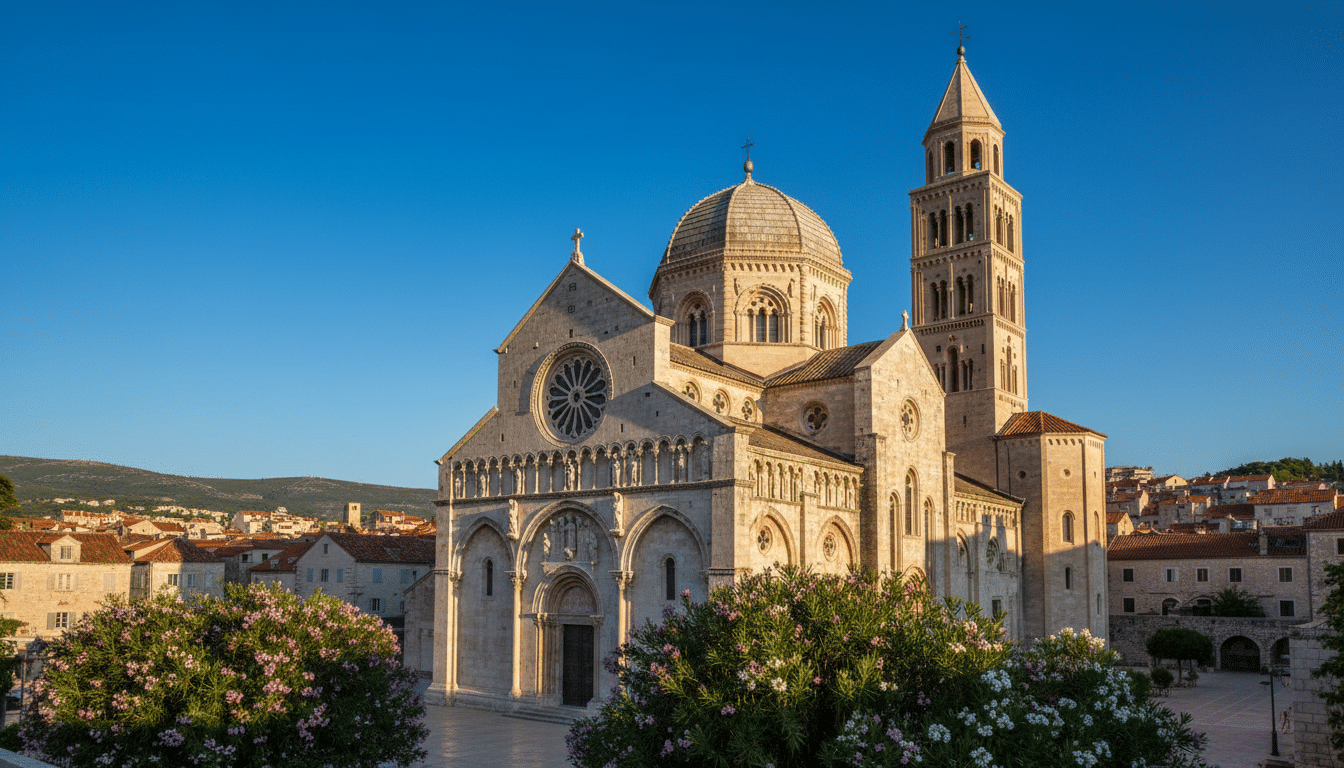
Cathedral of St. James is a UNESCO site and the only cathedral in Europe built entirely from stone. It was completed in 1535. That fact anchors community memory: baptisms, weddings, and funerals follow the same steps across generations.
Look for carved faces, detailed portals, and cool interiors that offer relief on hot days. These visible details tell a quiet story of craft and beauty.
Monasteries and quiet archives
Monastery spaces preserve art, ledgers, and ritual routines. They act as living archives that keep local traditions steady and accessible for visitors who pause and listen.
- What to notice: stone carvings, old records, ritual objects.
- Practical tips: dress respectfully, keep voices low, and check opening times around services.
- Calm spot: the Medieval Monastery Mediterranean Garden is a shaded place to reset after touring the old town.
Legends tied to real places near Šibenik
Follow the map a short way from the old town and you’ll find sites tied to clear, local legends. These stories link names, buildings, and water so you can read landscape and memory together.
Bogočin (Vilin grad) and the dragon at Lake Brljan
At Bogočin, also called Vilin grad, locals tell a tight tale: a dragon seized Miljeva and dragged her into Lake Brljan. Bogdan jumped after her and never returned. Later, Bogoje built Aranđelovac Monastery near the Krka to mark the loss.
Aranđelovac Monastery and the story’s imprint
The monastery stands as a quiet memorial. Visitors find prayer, carved stone, and a clear link between a local tragedy and a place of memory. This is how stories leave a mark on the area.
Zmajevo Oko (Dragon’s Eye Lake): natural reasons for a dragon tale
Zmajevo Oko is a saltwater lake connected underground to the sea. Its changing color and sudden temperature shifts look unusual. That natural behavior helps explain why people told dragon stories here.
- Reality check: these are oral legends tied to real geography, not proof of creatures.
- Plan: visit these sites as half-day additions when exploring the coast or nearby islands.
- Visitor gain: clearer place names, stronger regional identity, and a deeper view beyond the old town.
Customs visitors can join today: festivals, music, and hands-on culture
Live music, craft markets, and family workshops give you simple ways to take part in local culture today.
- Medieval Fair — September: street parades, costumed crafts, and public re-enactments you can walk through.
- Children’s Festival — summer: plays, exhibitions, and age-friendly workshops for families.
- Dalmatian Chanson Evenings — August: intimate chanson nights where songwriting is part of local music identity.
- SHIP Music Festival — summer nights in the old town: modern acts that pair well with heritage walks.
- Obonjan island — seasonal island programs mixing music, wellness, and creative workshops.
Who each suits and planning tips:
Families: pick the Children’s Festival for day-friendly shows and art activities. Couples and music fans: plan for Dalmatian chanson nights or SHIP after sunset. Creative travelers: reserve an island day for workshops and wellness sessions.
Evening atmosphere: fortress stages transform after dark—historic walls become lively venues with a relaxed, communal feel. Book tickets and ferry times ahead for popular events.
Food traditions that carry local identity from coast to table
Tastes here tie the coast’s harvest to easy rhythms you’ll notice at morning cafés and evening tables.
What fjaka looks like in cafés and day-to-day meals
Fjaka is a relaxed tempo. You’ll see people linger over coffee on the waterfront and skip rush. Meals follow the same calm—long sips, slow conversation, simple pleasure.
Konobas, seafood, and Dalmatian wines: what to order
A konoba is a homey tavern offering seasonal dishes. Expect simple rooms, local recipes, and warm service. Order fresh seafood when it’s available—grilled or fried sea bass is classic.
- Pair fish with Dalmatian wines for a true coastal meal.
- Pelegrini is a fine dining restaurant for special occasions.
- Konoba Marenda serves approachable plates like fried sea bass and rich goulash.
Old town restaurants and the role of seasonal ingredients
Choose small, shaded terraces for the beauty of a late lunch. If you want quieter tables, eat your main meal earlier in the day during summer.
Practical tip: look for chalk menus and local produce notes—that signals tradition without hype.
How to plan a folklore-focused day trip around Šibenik
Make one day count: map an early morning town walk, a nature detour, and a coastal finish.
Start early with a calm walk through the old town to catch empty lanes and market stalls. Leave by mid-morning for a short drive—about 20 minutes—to Krka National Park.
Krka National Park: waterfalls, walkways, and Visovac’s monastery on the lake
At Skradinski Buk follow wooden boardwalks and plan a steady 1–2 hour loop. Take the boat to Visovac to see the Franciscan monastery and a quiet lake spot.
Easy nearby towns and islands for extra culture along the coast
On the return, pick one coastal stop: Vodice (12 km) for beaches, Primošten (25 km) for postcard views, or Trogir (47 km) for old-town charm. If you prefer islands, add a short boat trip to touch an island or two for local music and markets.
Best times of year for events, walks, and comfortable weather
Spring and early fall offer mild temperatures and fewer crowds. July–August hits about 30°C, so plan shade breaks, water, and earlier times for long walks. Most routes follow the coastline or river course, so the sea stays part of each stop.
- Timing tip: old town dawn, Krka late morning, coastal pause late afternoon.
- Pacing: keep one main attraction per leg to avoid rush.
- Area note: nearby towns and islands add culture without long drives.
Conclusion
Close your visit by choosing one big site, one live night, and one nearby nature trip.
Recap: you can feel the city’s story through fortresses, the UNESCO cathedral, and the old town. Tie those stops to documented history and nearby lakes and monasteries for a fuller view.
Practical plan: pick one “city story” site (cathedral or fortress). Add a festival or music night if today’s schedule allows. Fit one day trip to a legend site or Krka.
Respect matters—observe sacred spaces, follow local cues, and be patient on busy summer streets. The coast and sea shape how people lived and the places they built.
Decide with purpose: legends—visit Bogočin or Zmajevo Oko; civic tradition—focus on Krešimir’s city identity and fortresses; daily culture—choose cafés, konobas, and summer events to finish your world-ready route.