Imagine the sun warming your skin as you choose between ancient Roman grandeur and a hidden medieval gem. Your sibenik vs split travel decision shapes your entire Dalmatian coast experience.
One pulses with urban energy. The other whispers with authentic charm. Both deliver stunning Adriatic beauty.
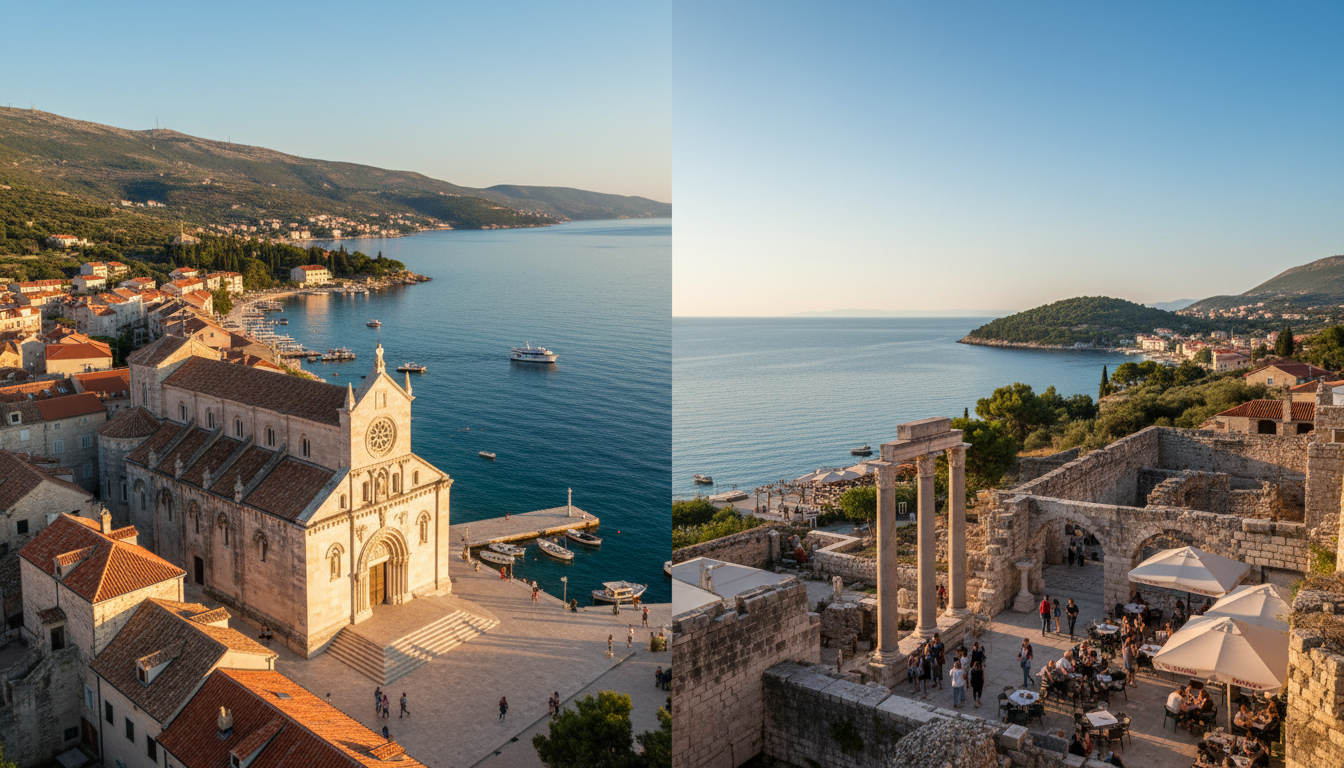
Split is the region’s vibrant heart. You’ll find a bustling waterfront promenade, lively bars, and the incredible 4th-century Diocletian’s Palace woven right into the city center.
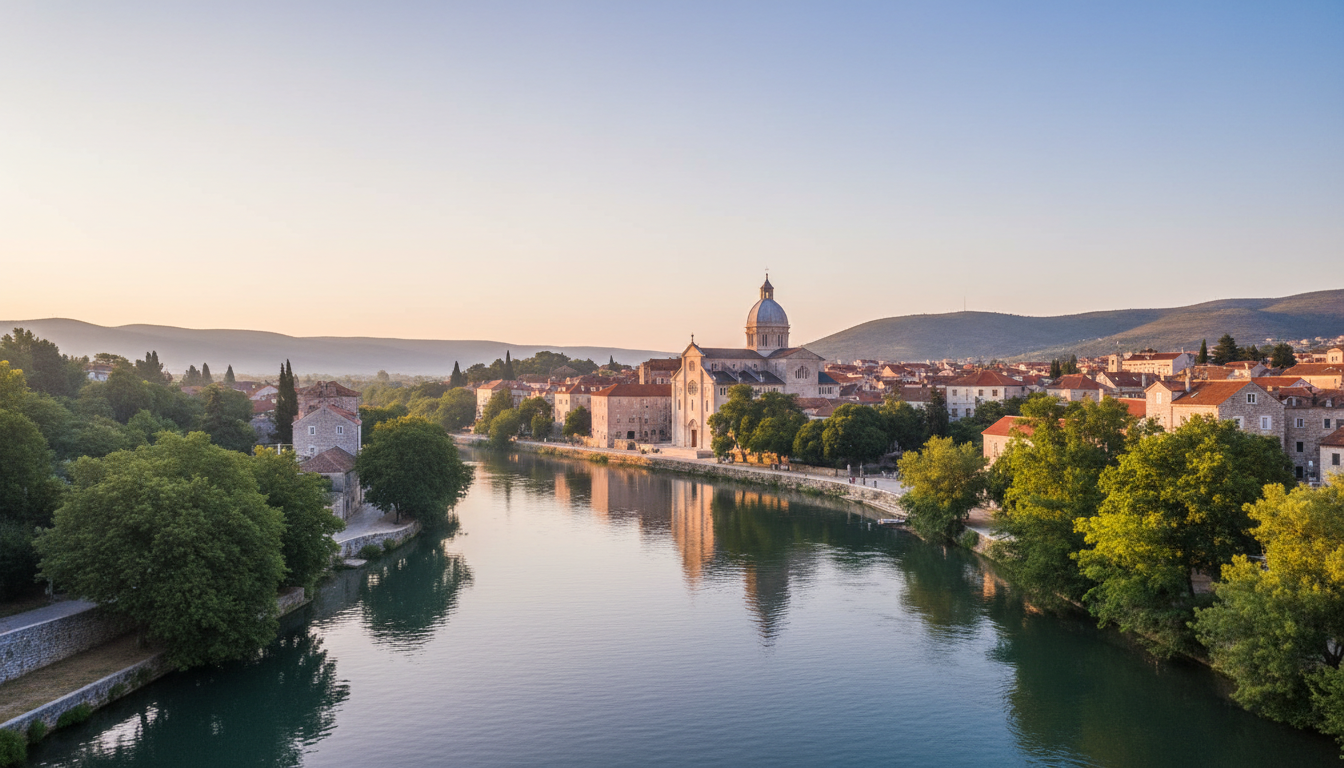
Šibenik feels like a secret. It’s the oldest native Croatian settlement on the coast, where the Krka River meets the sea. Explore its massive stone walls and a UNESCO-listed cathedral.
Your perfect spot depends on what you seek. Do you want nightlife and Roman history? Or a quieter maze of cobblestone streets?
This guide breaks down the sights, flavors, and vibes. We’ll help you match a destination to your dream trip.
Key Takeaways
- Split offers a dynamic, urban atmosphere with famous historical sites and vibrant nightlife.
- Šibenik provides a more intimate, authentic medieval feel with fewer tourist crowds.
- Both cities are located on Croatia’s stunning Dalmatian coast with beautiful seaside settings.
- Your choice depends on whether you prefer a bustling cultural hub or a serene historical town.
- Key landmarks include Diocletian’s Palace in Split and the Cathedral of St. James in Šibenik.
- Consider day trips; each city is a great base for exploring nearby islands and national parks.
- Practical logistics like airport access and accommodation variety differ between the two.
Discovering the Coastal Charm of Croatia
What defines this region is a unique atmosphere where monumental history is part of the daily backdrop. Croatia’s Dalmatian coast draws people from around the world for this reason.
Historic Cityscapes and Mediterranean Vibes
The area showcases centuries of architectural layers. You see Roman ruins, Venetian stonework, and Croatian design all woven together.
These towns feel like open-air museums. In one, the entire historic center is built from glowing white stone. Yet these aren’t sealed-off sites. They’re where life happens.
Local Culture and Community
You’ll feel a relaxed, Mediterranean pace everywhere. Think long afternoons at cafés and evening strolls on stone promenades.
This is a living culture. It values fresh food, local wine, and outdoor living. The warmth from locals makes you feel welcome instantly. For a perfect day by the sea, explore the best beaches in the area to experience this lifestyle firsthand.
Understanding this shared foundation helps you see what makes each place special. It’s the heart of the coastal charm.
Understanding sibenik vs split travel
These two locations offer fundamentally different rhythms and atmospheres. Your choice comes down to the type of experience you want.
Do you seek grand history woven into a bustling urban center? Or a more intimate discovery of a hidden gem?
Landmarks and Heritage Sites
Both cities protect UNESCO World Heritage sites. Their character, however, differs completely.
One site is grand and Roman. Its ancient palace forms the living heart of a modern city. You shop and dine among ruins that are nearly two millennia old.
The other is medieval and uniquely Croatian. Its cathedral is a masterpiece built entirely of stone. It stands as a monumental symbol of native architecture.
Distinct Urban Experiences
This contrast defines daily life. One old town is a vibrant, integrated neighborhood. It gives you a lot to explore without a museum feel.
The other old town is a quiet labyrinth. Its narrow streets wind uphill past stone houses. It feels more like discovering a secret.
Your preference decides. Choose the energy of a larger city. Or pick the authentic charm of a smaller town. Consider spending a bit of time in both.
Highlights of Split’s Rich History and Lifestyle
Split’s energy is palpable, a vibrant mix of millennia-old history and contemporary buzz. Life here unfolds within and around ancient stone.
Diocletian’s Palace and UNESCO Sites
The palace is the city’s living core, not a museum. You can walk through 1,700-year-old Roman cellars. The Peristyle square is flanked by the Cathedral of St. Domnius.
Look for the black Egyptian sphinx and the statue of Gregory of Nin. Its polished toe brings good luck. Even the old clock tower shows 24 hours, a quirky ancient detail.
Beaches, Promenades, and Nightlife
The waterfront promenade is the social heart. It fills with people in the afternoon and evening. Cafés and bars line the walkway with a great view.
Beaches here offer variety. Bene is a mellow spot backed by pine woods. Bring your own mat, as it’s not sandy.
After dark, options range from cocktail bars in palace walls to jazz clubs. The nightlife caters to many tastes, from quiet drinks to late revelry.
Exploring Šibenik’s Unique Offerings
Discover a place where medieval walls guard quiet streets and a cathedral stands as a stone masterpiece. This historic town offers a deeply authentic experience.
The Cathedral of St. James and Ancient Forts
The Cathedral of St. James is a UNESCO marvel. It was built entirely from stone, sourced from five different islands. No wood or bricks were used in its construction.
Look closely at the intricate carvings. Every detail is considered a work of art.
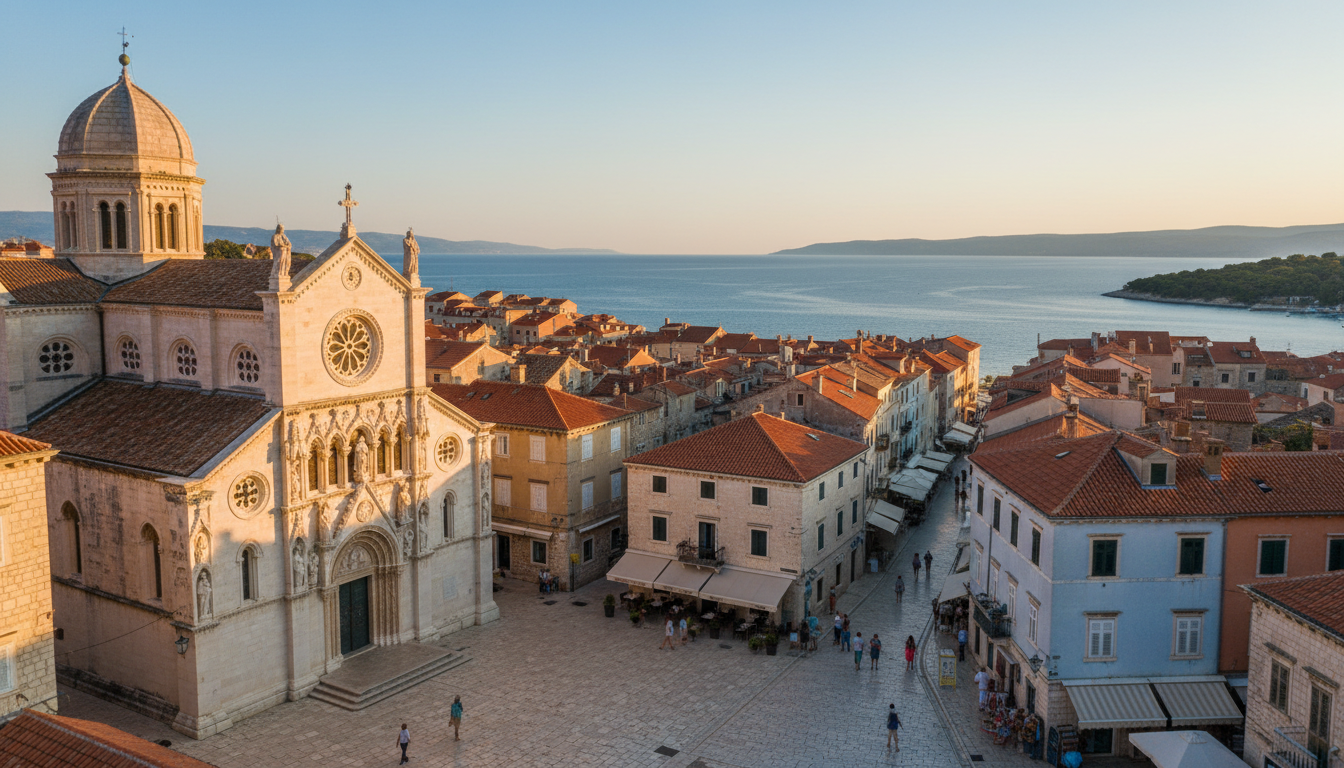
Four historic forts surround the old town. St. Michael’s Fortress sits high above, offering a spectacular view.
For a unique trip, take a boat to St. Nicholas’ Fortress. The ride through the channel is stunning.
Narrow Streets and Authentic Local Life
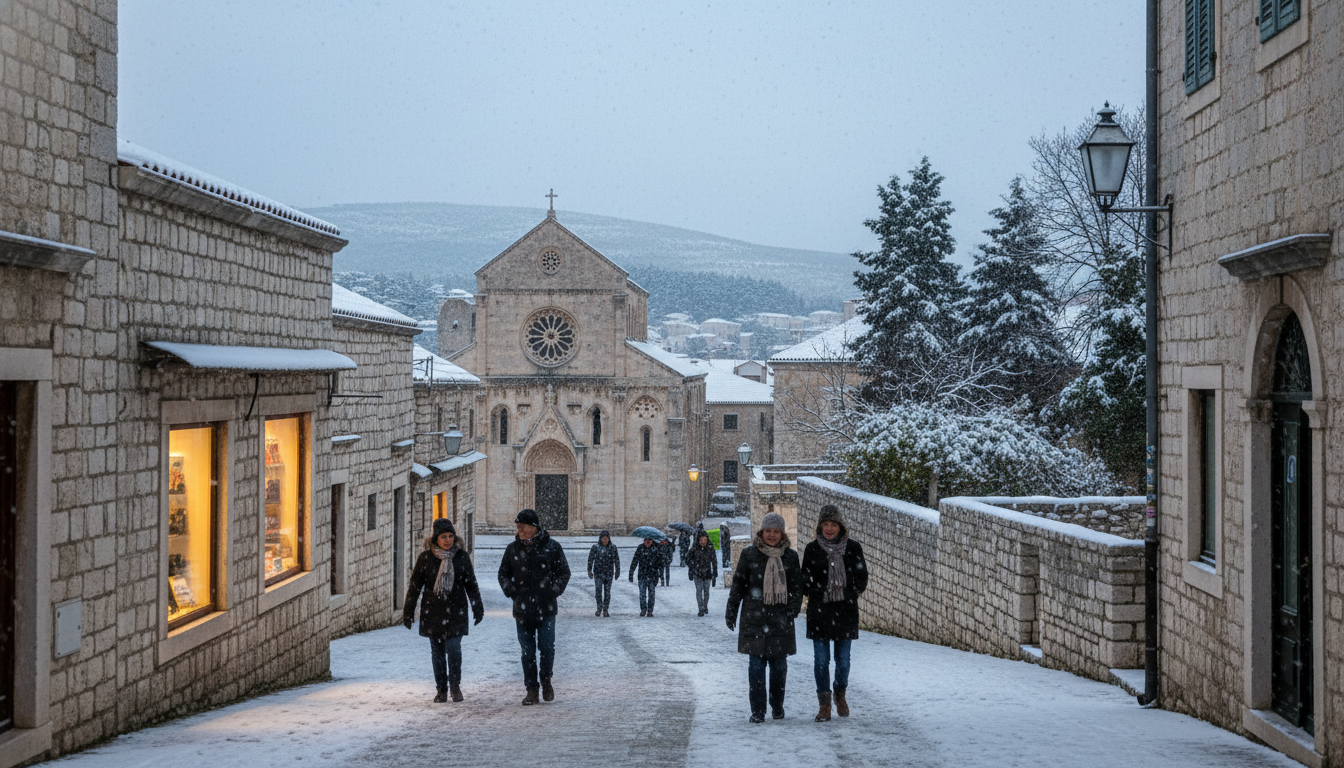
The old town is a maze of winding, narrow streets. They climb the hillside past centuries-old stone houses.
Getting lost here is part of the fun. You’ll find hidden courtyards and tiny churches.
This place feels magical because it’s authentic. You’ll see local residents, not just tourist crowds. The town retains its true character.
Be ready for some uphill walking. The atmosphere and discoveries make every step worthwhile.
Culinary Delights and Local Eateries
Dining here is an essential part of the travel experience, offering incredible value and authentic flavors. You’ll find the food and drink are notably less expensive than in Italy.
Expect excellent quality for your money.
Signature Dishes and Wine
Your meals will celebrate fresh, local ingredients. The cuisine is a highlight.
- Dalmatian prosciutto served with homemade sheep’s cheese.
- Fresh Adriatic seafood, grilled simply with olive oil.
- Local wines like Pošip (white) and Plavac Mali (red).
Restaurants, Bars, and Cafés
You have loads of great bars and excellent restaurants to choose from. In Split, the scene is vibrant, with restaurants ranging from casual konobas to modern waterfront spots.
For a more intimate meal, seek out family-run places where recipes are passed down.
Quality is high. For example, a full three-course meal for four with wine can cost around €130. Street-side shops sell local olive oil and artisan foods, perfect for a bit of souvenir shopping.
Planning Your Trip: Practical Travel Tips
A seamless trip hinges on knowing when to go, how to get around, and where to rest your head.
Smart preparation lets you focus on enjoying the stunning coast.
Best Time to Visit and Itinerary Ideas
The best time of year depends on your priorities. Peak summer brings hot weather and big crowds.
May, September, and early October offer a sweet spot. You get warm temperatures with fewer people.
Plan your trip length wisely. Split deserves two to three full days. You can see Šibenik thoroughly in one to two days.
Many visitors stay in Split and take a day trip north. The bus ride takes about an hour.
Local Transportation and Accommodation Options
Standard hotel check-in is after 14:00. Properties will hold your bags if you arrive early.
Split has a wide range of places to stay. For a special hotel in Šibenik, consider the D Resort. It sits in a beautiful bay with pools.
Costs around €200 per night. Find more options in our guide to top hotels in Šibenik.
Use public buses for cheap, regular service between cities. For local rides, skip taxis. Uber is more reliable.
Book popular restaurants a day ahead during the summer months. Always carry your GHIC card for healthcare access.
Croatia now uses the Euro. This makes transactions simple.
Day Trips, Itineraries, and Extended Stays
Crafting the perfect itinerary lets you soak in the best of Dalmatia without missing a beat. A classic plan bases you in one city with day excursions to the other. This approach gives you a rich taste of both places without changing hotels.
Structured Day-By-Day Travel Ideas
Consider a four-day schedule. Your first day involves arrival and an evening stroll along the promenade. Sample the vibrant nightlife at a historic bar or jazz club.
Dedicate day two to a walking tour of the ancient palace. Explore its cellars and grand square. In the afternoon, visit a nearby medieval town on a small island.
Day three is a full trip to the other historic destination. Wander its labyrinthine old town and see the stone cathedral. A boat ride to a sea fortress offers stunning coastal views.
On your final day, climb a hill for panoramic vistas or relax at a café. History enthusiasts can add an extra half-day to see a massive Roman archaeological park.
With more days, add island excursions. Visit beaches and wine regions on a day trip. Summer visitors should book boat tours ahead.
For a longer travel period, split your stay between both cities. Spend three to four nights in the bustling hub and two to three in the quieter town. This allows deeper exploration of each area.
Conclusion</h2>
There’s no wrong answer, only the right experience for your style of exploration. Your choice defines your trip. Pick urban energy or authentic charm.
Split is a dynamic base. It’s perfect for day trips around the area. You’ll love its beaches and vibrant nightlife. People enjoy returning to a comfortable hotel after exploring. The ancient palace buzzes all summer.
The other offers a quieter, deeply historical feel. Wander its medieval old town and discover ancient forts. This town provides a genuine, less crowded atmosphere.
Both promise excellent local food and wine. Their proximity lets you sample each. You’ll discover which place captures your heart in this beautiful part of the world.